|
§9 · Yinz Gotta See This
It's haunted. I'm not being cute — it's the haunted house, the one people here have told stories about for twenty years. And the part most people don't know is that the Catholic Church came, and it stopped.
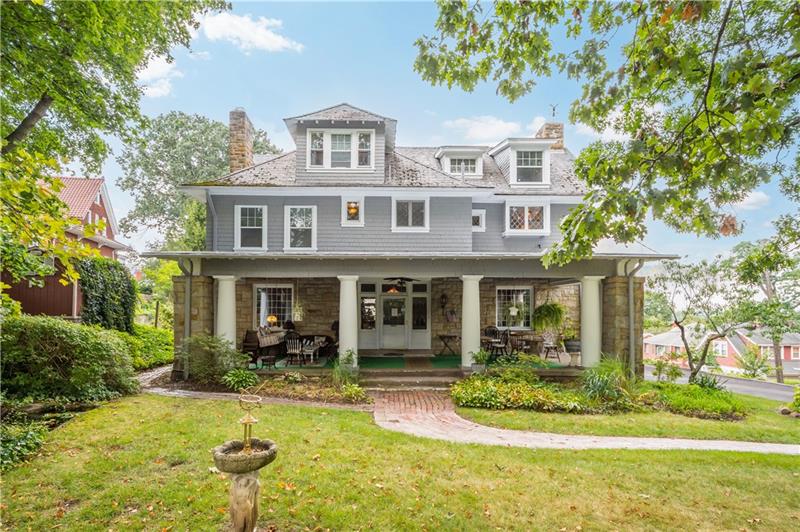
This is 3406 Brownsville Road in Brentwood, and it's on the market. If the address doesn't ring a bell, the story will. It's the house Bob Cranmer — a former Allegheny County commissioner — wrote a book about in 2014, after his family spent years describing things they couldn't explain. The Diocese of Pittsburgh took the case and assigned Father Ron Lengwin, later joined by other priests and a lay woman, Connie Valenti. It was not one afternoon with holy water. It took two years. The family says it ended in February 2006.
That was twenty years ago. The house has been quiet since, and for several years it's run as a bed and breakfast — people book a room, sleep there, eat breakfast, leave.
Now the part that's actually my job. Read the listing and you'll find a beautiful description of an 1899 Victorian — stone, slate roof, six gas fireplaces, coffered ceilings, a grand staircase and the original servants' staircase, a music room, a third-floor suite with its own kitchen. A genuinely spectacular old house, sold that way.
It does not mention the demon. Not once.
And it doesn't have to. Pennsylvania settled this in 2014 in Milliken v. Jacono: psychological stigma — a death, a crime, a haunting — is not a material defect, and a seller has no duty to volunteer it. The court's reasoning was that a terrible event inside a house doesn't change the quality of the house. Whatever you think of that, it's the law here.
| But the same ruling holds the useful half: a buyer makes it material by asking. Ask directly and it has to be answered honestly. True of this house, true of the one you tour Sunday. If something about a property's history would change your mind, the disclosure form won't save you. The question will. |
|